
Full cast gold & alloy crowns
Nothing in dentistry has a longer documented clinical track record than cast gold. A well-made gold crown conserves more tooth structure than any other full-coverage option and can outlast the patient. When longevity is the goal, gold remains the standard.
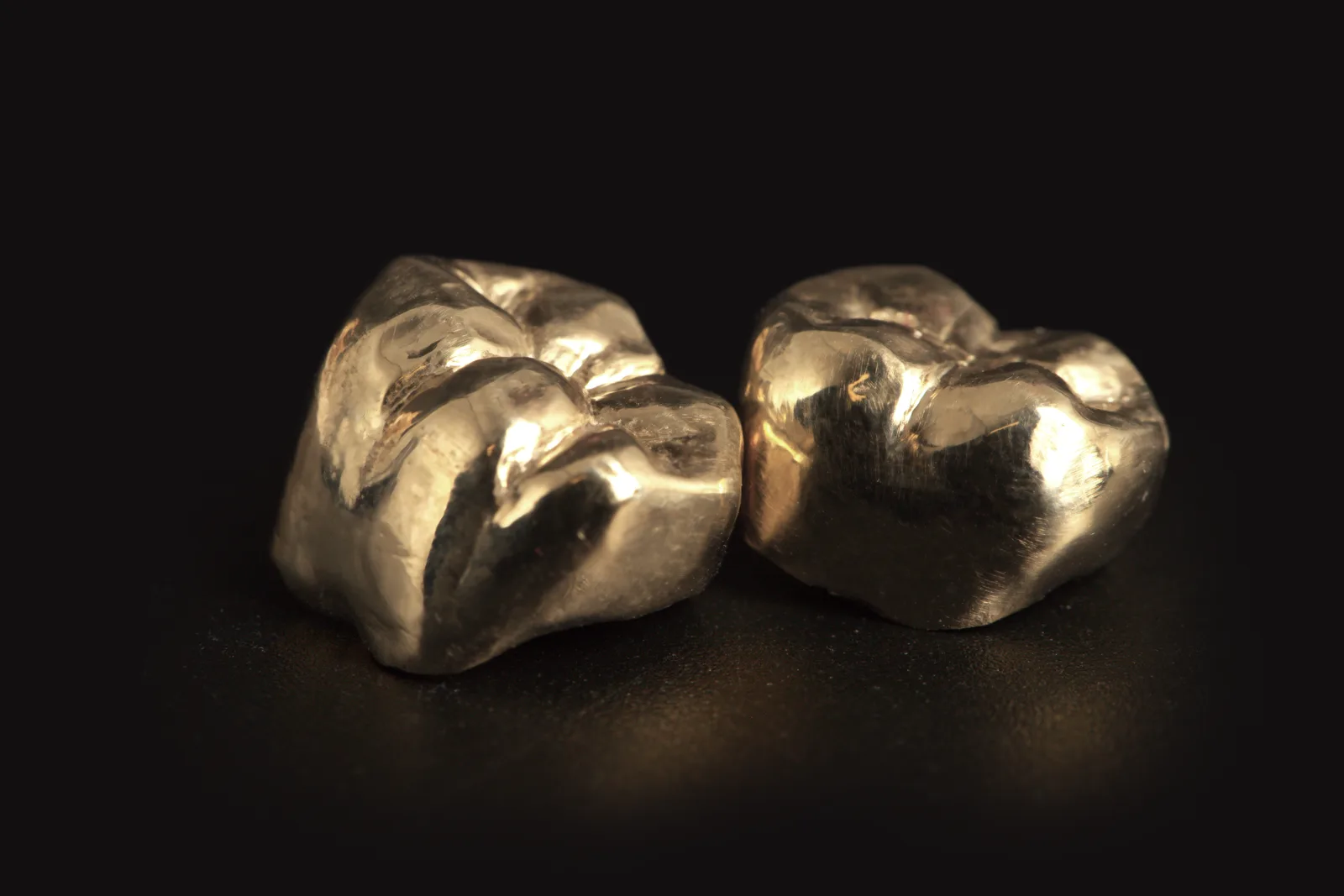
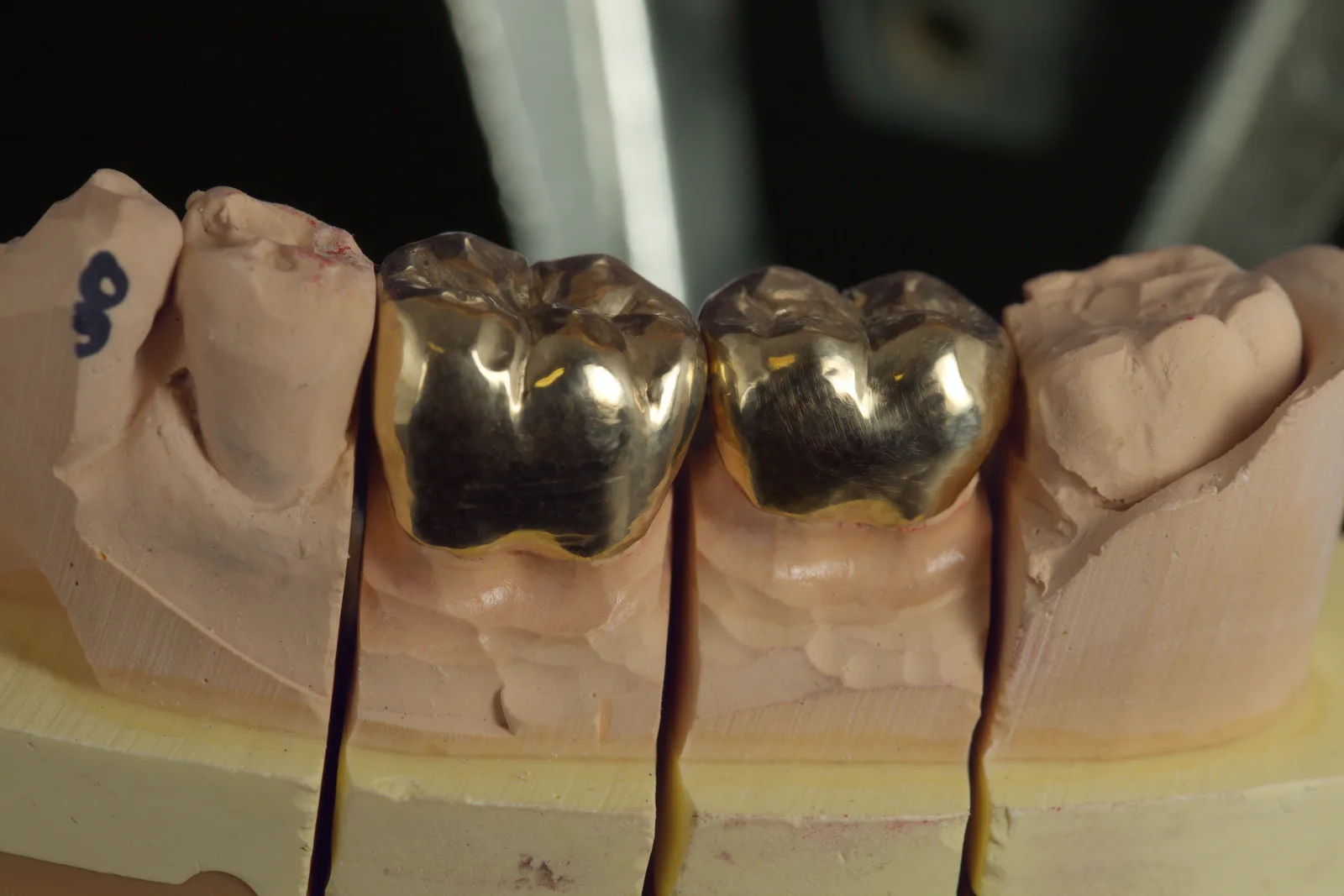
The original evidence-based restoration.
Cast gold wears at a rate compatible with enamel, seals margins better than any ceramic, and is the kindest material to opposing dentition. In heavily loaded bruxers, second molar restorations, and patients with limited space, it is often simply the correct choice.
We cast in Type III gold for standard full-coverage crowns, Type IV gold for high-stress situations, and high-noble palladium alloy as a more economical high-strength option. ¾ crowns and onlays available for tooth-structure-conservative preparations.
Full cast gold FAQ
Common questions from referring dentists about our full cast gold and high-noble restorations.
Why would I still prescribe a full cast gold crown?
Because nothing has outlasted it. Gold seals well at the margin, tolerates heavy function, and performs in places that are hard on ceramics — tight interocclusal space, second molars, and patients who are rough on everything. For a patient who grinds and isn’t worried about the shade, it is still the most durable restoration we make.
Which alloys do you cast?
Type III gold, Type IV gold and high-palladium. Type III is the softer, more traditional choice. Type IV is harder and holds its form better under heavy load and across longer spans. Tell us which you want, or send the case details and we’ll recommend one.
How much reduction does a gold crown need?
Full metal is the most forgiving restoration we make when it comes to space — about 0.5 to 0.6 mm is enough, where a PFM needs a minimum of 1 mm to carry porcelain. That is the practical reason gold still wins in tight interocclusal situations and on second molars where there simply isn’t room for ceramic.
Gold or zirconia for a heavy bruxer?
Both hold up. The usual deciding factor is the opposing arch: gold’s wear behaviour is closest to natural enamel, which is why it is still favoured when it occludes against natural dentition. Well-polished zirconia also performs well and gives you the esthetics gold can’t. Send us the case and we’ll tell you which way we’d go.
Can I send a digital scan instead of an impression?
Yes. If your scanner supports it, add GIE as a connected lab and send cases straight from your portal — see connect your scanner. If your system isn’t supported, upload STL or PLY files directly through send your scan files. Conventional impressions are also accepted — call and we’ll send a FedEx label for pickup.
How is a gold restoration priced?
By weight, and it moves with the market. Gold is a commodity, so the metal cost on a case reflects what gold is trading at when we cast it together with the weight of the finished restoration — a heavy molar crown carries more metal than a thin onlay. We quote it with the case so there are no surprises.