
Porcelain-fused-to-metal (PFM) crowns
The proven workhorse of restorative dentistry. Hand-layered porcelain over a cast metal substructure delivers the durability that posterior full-coverage and long-span bridge cases demand — in high-palladium, gold, or semi-precious alloys.
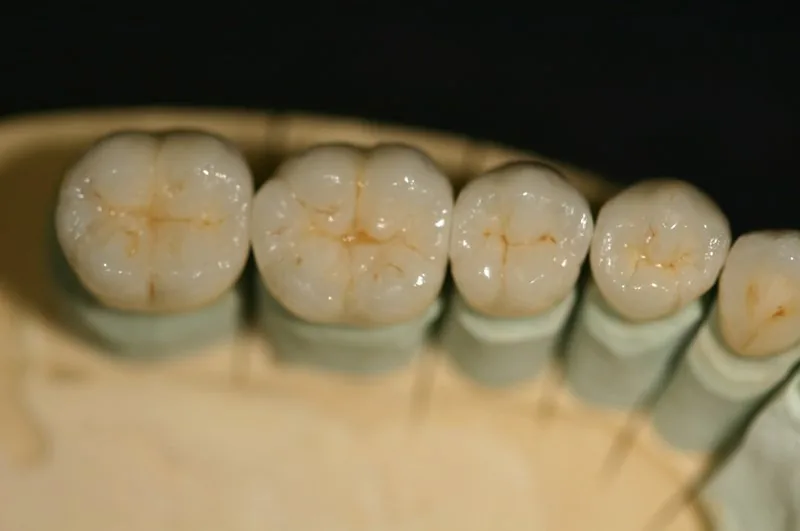
Decades of clinical track record.
PFM crowns have been in clinical use since the 1960s with long-term success data that no all-ceramic material can yet match for long-span bridges. The metal coping provides a rigid, dimensionally stable foundation that eliminates flexure-related ceramic fracture — the principal failure mode of all-ceramic bridges.
We cast substructures in high-palladium or gold alloy, sandblast and opaque, then hand-layer and fire Vita or Ivoclar compatible ceramics to shade. Metal occlusal and metal collar options available on request.
Related services
PFM crown FAQ
Common questions from referring dentists about our porcelain-fused-to-metal crowns and bridges.
When does PFM still make sense over all-ceramic?
PFM has the longest clinical track record of anything we make, and it still earns its place — long-span bridges, cases where you want a metal substructure carrying the porcelain, and situations where a proven, forgiving material matters more than maximum translucency. If you’re weighing it against zirconia for a particular case, send the details and we’ll give you a straight recommendation.
What alloys do you offer for PFM?
High-palladium, high-noble gold and base-metal alloys. They differ in how they cast, how the porcelain bonds, and how they age in the mouth. Specify what you prefer on the Rx, or leave it to us and we’ll choose based on the span, the opposing dentition and the esthetic demand of the case.
How much room do you need for a PFM crown?
A minimum of 1 mm. We’re stacking porcelain over the coping, so a PFM needs more room than a full-metal crown does. If a case is tight on interocclusal space, send it through and we’ll look at it on the model before we start — there is usually a way to make it work.
Do you finish the margin in porcelain or metal?
That comes down to the esthetics of the case and how much room we have to carry porcelain. A porcelain butt finish gives the better result where the margin will be visible; a metal collar is the more forgiving option when space is limited. Unless you specify, we’ll make that call from the model and the shade information you send.
Can I send a digital scan instead of an impression?
Yes. If your scanner supports it, add GIE as a connected lab and send cases straight from your portal — see connect your scanner. If your system isn’t supported, upload STL or PLY files directly through send your scan files. Conventional impressions are also accepted — call and we’ll send a FedEx label for pickup.